

Can a 5mm square hole be used for heat exchange?
May 22, 2025
Leave a message
In the realm of industrial design and engineering, heat exchange is a crucial process that impacts the efficiency and performance of countless systems. One question that often arises is whether a 5mm square hole can be effectively used for heat exchange. As a supplier of 5mm square holes, I am well - versed in the technical aspects and practical applications of these small yet significant components, and I'm excited to delve into this topic.
The Basics of Heat Exchange
Before we assess the suitability of 5mm square holes for heat exchange, it's essential to understand the fundamental principles of heat transfer. There are three primary mechanisms of heat transfer: conduction, convection, and radiation. Conduction occurs when heat is transferred through a solid material, convection involves the movement of a fluid (liquid or gas) to transfer heat, and radiation is the emission of energy in the form of electromagnetic waves.
In most heat - exchange applications, convection plays a dominant role. For instance, in a cooling system, a fluid (such as air or water) absorbs heat from a hot surface and carries it away. The efficiency of this process depends on several factors, including the surface area available for heat transfer, the velocity of the fluid, and the temperature difference between the hot surface and the fluid.
The Role of 5mm Square Holes in Heat Exchange
A 5mm square hole can significantly contribute to heat exchange in multiple ways. First, it increases the surface area available for heat transfer. When a fluid passes through these holes, it comes into contact with a larger surface area compared to a solid surface, enhancing the convective heat - transfer process.
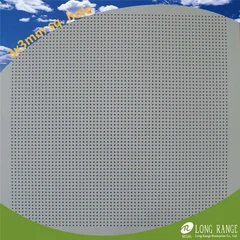
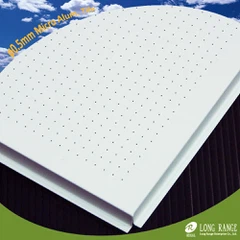
Let's consider an example of a perforated panel with 5mm square holes. The edges of the holes create additional surfaces where heat can be transferred between the panel and the fluid flowing through. This increased surface area allows for more efficient heat exchange, as more fluid molecules can interact with the heated surface, absorbing and carrying away heat.
Second, 5mm square holes can be used to control the flow of the fluid. By carefully designing the pattern and density of the holes, we can direct the fluid to specific areas where heat transfer is most needed. For example, in a heat - exchanger fin, the holes can be arranged in a way that forces the fluid to flow in a turbulent pattern. Turbulent flow is beneficial for heat exchange because it disrupts the boundary layer of the fluid near the surface, bringing fresh, cooler fluid into contact with the hot surface more frequently.


Advantages of Using 5mm Square Holes
One of the main advantages of using 5mm square holes for heat exchange is their versatility. These holes can be easily incorporated into various materials and structures. For example, they can be punched into metal sheets, plastic panels, or Gypsum Board 5x5mm Square Hole. This makes them suitable for a wide range of applications, from small - scale electronic cooling systems to large - scale industrial heat exchangers.
Another advantage is the cost - effectiveness. Compared to some complex heat - exchange technologies, creating 5mm square holes in a material is a relatively simple and inexpensive process. Whether it's through mechanical punching, laser cutting, or other manufacturing methods, the production of these holes can be achieved with high precision and at a reasonable cost.
In addition, 5mm square holes offer good durability. The square shape provides a stable structure that can withstand the forces exerted by the flowing fluid. Unlike circular holes, square holes have sharp corners that can enhance the turbulence of the fluid flow, further improving heat - transfer efficiency.
Limitations and Considerations
However, there are also some limitations and considerations when using 5mm square holes for heat exchange. One of the main challenges is the potential for clogging. If the fluid contains particles or debris, these can accumulate in the holes, reducing the flow rate and the efficiency of heat exchange. To mitigate this issue, proper filtration systems can be installed upstream of the heat - exchange component.
Another consideration is the pressure drop. As the fluid passes through the holes, there will be a certain amount of pressure loss. This pressure drop needs to be carefully balanced with the heat - transfer efficiency. If the pressure drop is too large, it may require more energy to pump the fluid through the system, offsetting the benefits of improved heat exchange.
The size of the holes also matters. While 5mm square holes are suitable for many applications, in some cases, smaller or larger holes may be more appropriate. For example, in applications where the fluid has a high viscosity, larger holes may be needed to ensure smooth flow. On the other hand, in applications where a high - density heat - transfer surface is required, smaller holes may be preferred.
Real - World Applications
5mm square holes have found numerous applications in real - world heat - exchange scenarios. In the electronics industry, they are used in heat sinks to cool computer processors and other electronic components. The holes allow air to flow through the heat sink, carrying away the heat generated by the electronics.
In the automotive industry, 5mm square holes can be found in radiator grilles and engine cooling systems. These holes help to regulate the temperature of the engine by allowing air to pass through and cool the radiator fluid.
In the construction industry, Gypsum Board 5x5mm Square Hole can be used in ventilation systems to facilitate heat exchange and improve indoor air quality. The holes in the gypsum board allow air to circulate, removing heat and moisture from the building.
Conclusion
In conclusion, a 5mm square hole can indeed be used for heat exchange, offering several advantages such as increased surface area, fluid - flow control, versatility, and cost - effectiveness. However, it's important to be aware of the limitations and considerations, such as clogging and pressure drop. By carefully designing the hole pattern, density, and considering the specific requirements of the application, we can optimize the use of 5mm square holes for efficient heat exchange.
If you are interested in exploring the potential of 5mm square holes for your heat - exchange needs, I encourage you to reach out for a detailed discussion. We can work together to determine the best solution for your specific project, taking into account factors such as material selection, hole pattern design, and system integration. Let's start a conversation about how these small yet powerful components can enhance the performance of your heat - exchange systems.
References
- Incropera, F. P., & DeWitt, D. P. (2002). Fundamentals of Heat and Mass Transfer. Wiley.
- Holman, J. P. (2010). Heat Transfer. McGraw - Hill.
- Bergman, T. L., Lavine, A. S., Incropera, F. P., & Dewitt, D. P. (2011). Introduction to Heat Transfer. Wiley.
Send Inquiry