

How to adjust the acoustic performance of a 6mm round hole gypsum board?
Dec 09, 2025
Leave a message
When delving into the world of architectural acoustics, the 6mm round hole gypsum board stands out as a remarkable solution. As a supplier of Gypsum Board 6mm Round Hole, I've witnessed firsthand the transformative power of this product in various acoustic environments. In this blog, I'll share insights on how to adjust the acoustic performance of a 6mm round hole gypsum board, drawing on both scientific knowledge and practical experience.
Understanding the Basics of Acoustics and Gypsum Board
Before we discuss adjustment methods, it's crucial to understand the fundamental principles of acoustics and how the 6mm round hole gypsum board interacts with sound waves. Sound is essentially a vibration that travels through air in waves. When these waves encounter a gypsum board, several things can happen: they can be reflected, absorbed, or transmitted.
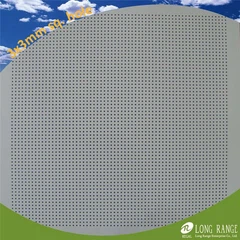
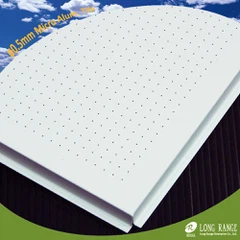
The 6mm round holes in the gypsum board play a vital role in its acoustic properties. These holes act as channels for sound waves to enter the board. Once inside, the sound energy is converted into heat energy through friction with the internal structure of the board, resulting in sound absorption.
Factors Affecting the Acoustic Performance
Hole Spacing and Pattern
The spacing and pattern of the 6mm round holes significantly influence the acoustic performance of the gypsum board. A higher hole density generally leads to better sound absorption, as more sound waves can enter the board. However, this also depends on the frequency range of the sound. For low - frequency sounds, a wider hole spacing may be more effective, while high - frequency sounds are better absorbed with a closer hole spacing.
Board Thickness and Material
Although we are focusing on 6mm thick gypsum boards, the type of gypsum used and the overall density of the board can affect its acoustic performance. Higher - density gypsum boards tend to have better sound insulation properties. Additionally, the backing material behind the gypsum board also plays a role. A porous or fibrous backing material can enhance sound absorption by providing an additional layer for sound energy dissipation.
Installation Method
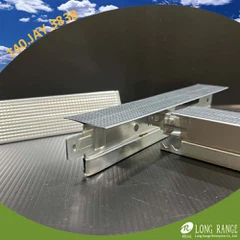
The way the 6mm round hole gypsum board is installed can have a substantial impact on its acoustic performance. Ensuring a tight fit between the boards and proper sealing of joints can prevent sound leakage. Moreover, leaving an air gap behind the board can act as a resonating chamber, further improving sound absorption, especially for low - frequency sounds.
Adjusting the Acoustic Performance
Modifying Hole Spacing and Pattern
If you find that the current acoustic performance of the 6mm round hole gypsum board is not meeting your requirements, one option is to adjust the hole spacing and pattern. For example, if you are aiming to enhance high - frequency sound absorption, you can consider using a gypsum board with a closer hole spacing. Some manufacturers offer custom - made boards with specific hole patterns and spacings to meet different acoustic needs.
Adding Backing Materials
Another effective way to adjust the acoustic performance is by adding backing materials. Fiberglass insulation, mineral wool, or acoustic batting can be installed behind the gypsum board. These materials are highly porous and can trap sound waves, increasing the overall sound absorption coefficient of the system. When choosing a backing material, consider its thickness, density, and acoustic properties to ensure compatibility with the gypsum board.
Altering the Air Gap
The air gap between the gypsum board and the wall or ceiling structure can be adjusted to optimize acoustic performance. A larger air gap can improve low - frequency sound absorption. However, increasing the air gap too much may lead to a decrease in high - frequency absorption. Therefore, it's important to find the right balance based on the specific acoustic requirements of the space.
Case Studies
Let's take a look at a couple of real - world examples to illustrate how the acoustic performance of a 6mm round hole gypsum board can be adjusted.


Case 1: Recording Studio
In a recording studio, precise acoustic control is essential. Initially, the studio was using a standard 6mm round hole gypsum board with a relatively wide hole spacing. The sound quality was good, but there was still some unwanted reflection of high - frequency sounds. To address this issue, the studio owner replaced the existing boards with custom - made boards that had a closer hole spacing. Additionally, a layer of high - density fiberglass insulation was installed behind the boards. As a result, the high - frequency sound absorption improved significantly, and the overall acoustic quality of the studio was enhanced.
Case 2: Conference Room
A large conference room was experiencing problems with echo and poor speech intelligibility. The original installation of the 6mm round hole gypsum board had a small air gap behind it. By increasing the air gap to 100mm and adding a layer of mineral wool, the low - frequency sound absorption improved, and the echo was reduced. This adjustment made the conference room more suitable for meetings and presentations.
Testing and Evaluation
After making adjustments to the acoustic performance of the 6mm round hole gypsum board, it's important to conduct testing and evaluation. There are several methods available for measuring acoustic performance, such as the reverberation time test and the sound absorption coefficient test.
The reverberation time test measures the time it takes for sound to decay by 60 decibels in a room. A shorter reverberation time indicates better sound absorption. The sound absorption coefficient test measures the proportion of sound energy absorbed by the material at different frequencies. By conducting these tests, you can determine whether the adjustments have achieved the desired acoustic performance.
Conclusion
Adjusting the acoustic performance of a 6mm round hole gypsum board is a multi - faceted process that involves understanding the principles of acoustics, considering various factors, and implementing appropriate adjustment methods. As a supplier of Gypsum Board 6mm Round Hole, I'm committed to providing high - quality products and sharing knowledge to help you create optimal acoustic environments.
If you're interested in learning more about our 6mm round hole gypsum boards or need assistance in adjusting the acoustic performance for your project, I encourage you to reach out for a procurement discussion. Our team of experts is ready to assist you in finding the best solutions for your specific needs.
References
[1] Beranek, Leo L. "Acoustics." Acoustical Society of America, 1954.
[2] Kuttruff, Heinrich. "Room Acoustics." Spon Press, 2009.
[3] Craik, R. J. M. "Handbook of Acoustics." Springer, 2007.
Send Inquiry