


How to ensure the concentricity of a 6mmx45 round hole?
Jun 02, 2025
Leave a message
Ensuring the concentricity of a 6mmx45 round hole is a critical aspect in manufacturing and supply. As a supplier of these specific round holes, I understand the importance of maintaining high - quality concentricity to meet the diverse needs of our customers. In this blog, I will share some effective methods and considerations for ensuring the concentricity of a 6mmx45 round hole.
Understanding Concentricity
Concentricity refers to the degree to which the center of a hole aligns with a specified reference point or axis. In the case of a 6mmx45 round hole, precise concentricity is crucial as it directly impacts the functionality and performance of the final product where these holes are used. For example, in mechanical components, misaligned holes can lead to improper fitting, increased wear and tear, and even mechanical failures.


Factors Affecting Concentricity
Machine Precision
The precision of the machining equipment plays a vital role in achieving accurate concentricity. High - end CNC (Computer Numerical Control) machines are often preferred for drilling 6mmx45 round holes. These machines can be programmed with high precision, allowing for consistent and accurate hole placement. However, even the most advanced machines require regular maintenance and calibration. Worn - out parts, such as drill bits or spindle bearings, can cause deviations in the drilling process, leading to poor concentricity.
Material Characteristics
The properties of the material in which the hole is being drilled also affect concentricity. Different materials have different hardness, density, and internal structures. For instance, a softer material like aluminum may deform more easily during the drilling process compared to a harder material like stainless steel. This deformation can cause the hole to shift from its intended position, resulting in reduced concentricity. Additionally, inhomogeneities in the material, such as voids or impurities, can also disrupt the drilling process and affect the alignment of the hole.
Operator Skill
The skill and experience of the operator are significant factors. An experienced operator can make real - time adjustments during the drilling process, such as adjusting the feed rate or spindle speed based on the material and the drilling conditions. They can also detect early signs of concentricity issues and take corrective actions promptly. On the other hand, an inexperienced operator may not be able to handle unexpected situations effectively, leading to sub - standard concentricity.
Methods to Ensure Concentricity
Precise Fixturing
Using a well - designed fixture is essential for ensuring concentricity. The fixture should securely hold the workpiece in place, preventing any movement during the drilling process. It should also be accurately aligned with the drilling machine's axis. For example, a custom - made jig can be designed to position the workpiece precisely, ensuring that the center of the hole is aligned with the drill bit. This way, even if there are minor vibrations or variations in the machine, the workpiece remains stable, and the hole is drilled with high concentricity.
Tool Selection and Maintenance
Selecting the right drill bit is crucial. For a 6mmx45 round hole, a high - quality drill bit with the appropriate diameter and geometry should be chosen. The drill bit should be sharp and free from any defects. Regularly inspecting and replacing drill bits when they become worn is necessary. A dull drill bit can cause the hole to be off - center as it may wander during the drilling process. Additionally, using coolant during the drilling process can help reduce heat and friction, which can improve the lifespan of the drill bit and the concentricity of the hole.
Quality Control Checks
Implementing a comprehensive quality control system is vital. This can include both in - process and post - process inspections. During the drilling process, in - process inspections can be carried out using sensors or gauges to monitor the position and alignment of the hole in real - time. If any deviations are detected, the drilling process can be adjusted immediately. After the hole is drilled, post - process inspections using measuring tools such as coordinate measuring machines (CMMs) can be performed. CMMs can accurately measure the position and concentricity of the hole, allowing for any non - compliant parts to be identified and either re - worked or discarded.
Application in Gypsum Board
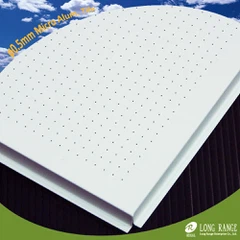
In the context of gypsum board, our Gypsum Board 6mmx45 Round Hole ZEST and CHECKER products require strict concentricity control. Gypsum board is widely used in construction for interior wall and ceiling applications. The 6mmx45 round holes in the gypsum board may be used for various purposes, such as ventilation, acoustic control, or for the installation of fixtures.
When drilling holes in gypsum board, the relatively soft nature of the material requires special attention. The drill bit should be carefully selected to avoid excessive damage to the gypsum. A slow feed rate and appropriate spindle speed should be used to ensure that the hole is drilled cleanly and with high concentricity. Moreover, quality control checks are even more important in gypsum board production, as any misaligned holes can affect the aesthetic appearance and functionality of the final product.
Conclusion
Ensuring the concentricity of a 6mmx45 round hole is a multi - faceted process that involves machine precision, material characteristics, operator skill, and quality control. As a supplier, we are committed to providing high - quality products with excellent concentricity. By implementing the methods mentioned above, we can meet the strict requirements of our customers and ensure that our products perform well in various applications.
If you are interested in our 6mmx45 round hole products, whether for gypsum board or other applications, we invite you to contact us for procurement and further discussions. We look forward to working with you to meet your specific needs.
References
- "Manufacturing Engineering and Technology" by Serope Kalpakjian and Steven R. Schmid.
- "Fundamentals of Machining and Machine Tools" by Robert K. McPherson.
Send Inquiry