

How to measure the quality of 13.5mm round hole gypsum board?
Dec 26, 2025
Leave a message
Measuring the quality of a 13.5mm round hole gypsum board is a critical task, especially for those involved in the construction and interior design industries. As a supplier of Gypsum Board 13.5mm Round Hole, I understand the significance of ensuring that our products meet high - quality standards. In this blog, I will share some key methods and factors to consider when evaluating the quality of these gypsum boards.
Physical Appearance
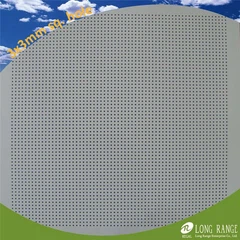
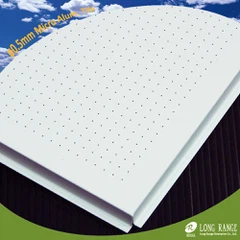
The first step in measuring the quality of a 13.5mm round hole gypsum board is to assess its physical appearance. A high - quality board should have a smooth and even surface. Any visible cracks, chips, or unevenness can indicate poor manufacturing processes or damage during transportation. The round holes should be uniformly sized and evenly spaced. Deviations in hole size or spacing can affect the board's performance, especially in applications where acoustic or aesthetic properties are important.
Inspect the edges of the board. They should be straight and free from rough or jagged areas. A well - cut edge ensures a proper fit during installation and reduces the risk of damage during handling. Additionally, check the color consistency of the board. A consistent color indicates a uniform manufacturing process and can contribute to the overall aesthetic appeal of the finished project.
Thickness and Density
The specified thickness of a 13.5mm round hole gypsum board is crucial for its structural integrity and performance. Use a caliper to measure the thickness at multiple points across the board. The measured thickness should be within an acceptable tolerance range, typically ±0.5mm. A board that is too thin may be less durable and may not provide the necessary strength, while a board that is too thick can add unnecessary weight and cost.
Density is another important factor. Higher - density gypsum boards generally offer better strength and sound insulation properties. To measure the density, calculate the mass of a known volume of the board. Divide the mass (in grams) by the volume (in cubic centimeters) to obtain the density (in g/cm³). For 13.5mm round hole gypsum boards, a typical density range might be between 0.8 - 1.2 g/cm³, depending on the specific application and design requirements.
Acoustic Performance
One of the key applications of 13.5mm round hole gypsum boards is in acoustic insulation. To measure the acoustic performance, we can use a reverberation chamber. Place the gypsum board in the chamber and measure the sound absorption coefficient. The sound absorption coefficient indicates how well the board absorbs sound energy at different frequencies.
A high - quality 13.5mm round hole gypsum board should have a relatively high sound absorption coefficient, especially in the frequency range of 200 - 2000 Hz, which is the most critical range for human hearing. The round holes in the board play a significant role in acoustic performance. They create a porous structure that allows sound waves to enter and be dissipated within the board, reducing the reflection of sound and improving room acoustics.
Fire Resistance
Fire resistance is an essential quality factor for gypsum boards, especially in commercial and public buildings. Gypsum is a natural fire - resistant material, but the quality of the fire - resistance treatment and the overall manufacturing process can affect the board's performance.
To test the fire resistance of a 13.5mm round hole gypsum board, we can conduct a fire test in accordance with relevant standards, such as ASTM E119 or BS 476. These tests measure the time that the board can withstand a specified fire exposure without losing its structural integrity or allowing the spread of fire. A high - quality gypsum board should have a good fire - resistance rating, such as a 30 - minute, 60 - minute, or 90 - minute rating, depending on the application.
Moisture Resistance
In areas with high humidity or potential water exposure, such as bathrooms and kitchens, moisture resistance is a crucial quality factor. To measure the moisture resistance of a 13.5mm round hole gypsum board, we can conduct a water absorption test. Cut a sample of the board and immerse it in water for a specified period, usually 24 hours. Then, measure the weight gain of the sample.
A high - quality gypsum board should have a low water absorption rate. A water absorption rate of less than 10% is generally considered acceptable for moisture - resistant gypsum boards. Additionally, check for any signs of swelling or warping after the water absorption test. A board that maintains its shape and integrity after exposure to water is of better quality.
Installation Ease
The ease of installation is also an important aspect of quality. A well - designed 13.5mm round hole gypsum board should be easy to cut, drill, and install. The holes in the board should not cause any difficulties during the installation process, such as snagging on tools or making it difficult to align the board.
Check the compatibility of the board with common installation methods and accessories, such as screws, nails, and adhesives. A high - quality board should be able to be securely fastened without cracking or splitting. Additionally, consider the weight of the board. A lighter board is generally easier to handle and install, especially in large - scale projects.
Environmental Impact
In today's construction industry, environmental impact is an increasingly important consideration. When evaluating the quality of a 13.5mm round hole gypsum board, look for products that are environmentally friendly. This includes using recycled materials in the manufacturing process and having low levels of volatile organic compounds (VOCs).
Check if the board is certified by relevant environmental standards, such as GreenGuard or Forest Stewardship Council (FSC). These certifications indicate that the product meets certain environmental criteria and is a more sustainable choice.
Cost - Effectiveness
While quality is important, cost - effectiveness is also a significant factor for most customers. Consider the overall cost of the 13.5mm round hole gypsum board, including the purchase price, installation cost, and long - term maintenance cost. A high - quality board may have a higher initial cost, but it can save money in the long run by providing better performance and durability.
Compare the features and performance of different brands and products to find the best value for your money. Look for a board that offers a good balance between quality and cost.


As a supplier of Gypsum Board 13.5mm Round Hole, we are committed to providing high - quality products that meet the diverse needs of our customers. If you are interested in purchasing our 13.5mm round hole gypsum boards or have any questions about our products, please feel free to contact us for a detailed discussion. We look forward to working with you on your next project.
References
- ASTM International. (Year). ASTM E119 - Standard Test Methods for Fire Tests of Building Construction and Materials.
- British Standards Institution. (Year). BS 476 - Fire Tests on Building Materials and Structures.
Send Inquiry