

What is the moisture resistance of Gypsum Board 8mm Round Hole?
Nov 17, 2025
Leave a message
Moisture resistance is a crucial property when it comes to construction materials, especially for those used in interior spaces. As a supplier of Gypsum Board 8mm Round Hole, I am often asked about the moisture resistance of this particular product. In this blog post, I will delve into the details of the moisture resistance of 8mm round hole gypsum board, exploring its characteristics, factors affecting it, and how it stands up in different environments.
Understanding Gypsum Board and Its Basics
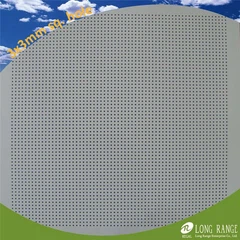
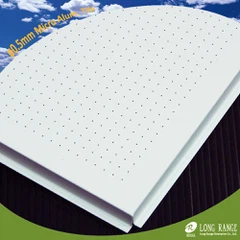
Gypsum board, also known as drywall or plasterboard, is a widely used building material made of gypsum plaster pressed between two thick sheets of paper. It is popular for its ease of installation, fire resistance, and cost - effectiveness. The 8mm round hole gypsum board, as the name suggests, has 8mm diameter holes perforated on its surface. These holes are not just for aesthetic purposes; they also serve functional roles such as improving acoustic performance by allowing sound waves to penetrate and be absorbed within the board.
Moisture Resistance Mechanisms of Gypsum Board
The moisture resistance of gypsum board is mainly determined by its composition and manufacturing process. Gypsum itself has a certain degree of porosity, which means it can absorb and release moisture to some extent. However, in its natural state, gypsum is relatively hygroscopic, meaning it can readily absorb water from the surrounding environment.


To enhance the moisture resistance of gypsum board, manufacturers often add special additives during the production process. These additives can form a protective layer on the surface of the gypsum crystals, reducing the board's ability to absorb water. Additionally, the paper facing on the gypsum board also plays a role. Some moisture - resistant gypsum boards use a water - resistant paper that acts as a barrier, preventing water from directly contacting the gypsum core.
Factors Affecting the Moisture Resistance of 8mm Round Hole Gypsum Board
Environmental Conditions
The humidity level of the environment where the gypsum board is installed is a significant factor. In high - humidity areas such as bathrooms, kitchens, or basements, the board is more likely to be exposed to moisture. For example, in a bathroom with poor ventilation, steam from hot showers can increase the humidity in the air, and if the gypsum board is not properly protected, it may start to absorb moisture.
Installation Quality
Proper installation is crucial for maintaining the moisture resistance of the gypsum board. Gaps between the boards or improper sealing around joints can allow moisture to penetrate. If the boards are not installed with the correct spacing and are not securely fastened, it can also lead to problems. For instance, if there are large gaps between the 8mm round hole gypsum boards, water vapor can easily seep through and reach the gypsum core.
Surface Treatment
Applying a moisture - resistant paint or coating on the surface of the gypsum board can significantly improve its moisture resistance. These coatings can form an additional barrier against water. However, the effectiveness of the coating depends on its quality and the application method. A high - quality, properly applied coating can provide long - term protection, while a poorly applied or low - quality coating may peel off or crack over time, reducing its protective capabilities.
Performance in Different Environments
Normal Indoor Environments
In normal indoor environments with average humidity levels (around 30% - 60% relative humidity), the 8mm round hole gypsum board with standard moisture - resistant features can perform well. It can maintain its structural integrity and appearance over a long period. The perforated holes do not significantly affect its moisture resistance in these conditions, as long as the board is installed correctly and there are no external sources of excessive moisture.
High - Humidity Areas
In high - humidity areas, the moisture resistance of the 8mm round hole gypsum board is put to the test. While moisture - resistant gypsum boards are designed to withstand some level of humidity, continuous exposure to high levels of moisture can still cause problems. In such areas, it is recommended to use additional moisture - proofing measures. For example, installing a vapor barrier behind the gypsum board can prevent moisture from reaching the board from the outside. In bathrooms, using a waterproof membrane around the perimeter of the board and in areas prone to water splashes can also enhance its performance.
Outdoor Use
Generally, 8mm round hole gypsum board is not recommended for outdoor use. The exposure to rain, snow, and extreme weather conditions can quickly compromise its moisture resistance. The perforated holes can allow water to penetrate more easily, and the gypsum core can become saturated, leading to swelling, warping, and loss of structural integrity.
Testing the Moisture Resistance of 8mm Round Hole Gypsum Board
There are several standard tests to evaluate the moisture resistance of gypsum board. One common test is the water absorption test, where a sample of the board is immersed in water for a specified period, and the amount of water absorbed is measured. Another test is the humidity resistance test, which involves exposing the board to a controlled high - humidity environment for an extended period and observing any changes in its physical properties, such as weight gain, dimensional stability, and surface appearance.
As a supplier, we ensure that our 8mm round hole gypsum board meets the relevant industry standards for moisture resistance. We conduct regular quality control checks to guarantee that the products we offer are of high quality and can perform as expected in different applications.
Benefits of Good Moisture Resistance in 8mm Round Hole Gypsum Board
Durability
A gypsum board with good moisture resistance has a longer lifespan. It can resist the effects of moisture - related damage such as mold growth, rot, and warping. This means that the structure built with this board will remain stable and aesthetically pleasing for a longer time, reducing the need for frequent repairs or replacements.
Health and Safety
Moisture - damaged gypsum board can become a breeding ground for mold and mildew. These microorganisms can release spores into the air, which can cause respiratory problems and other health issues for the occupants of the building. By using 8mm round hole gypsum board with good moisture resistance, the risk of mold growth is significantly reduced, creating a healthier indoor environment.
Aesthetic Appeal
Moisture - damaged gypsum board can develop unsightly stains, discoloration, and bulges. A moisture - resistant board maintains its smooth and clean appearance, enhancing the overall aesthetic of the interior space. The perforated holes on the 8mm round hole gypsum board also contribute to its unique visual appeal, and with good moisture resistance, this visual quality can be preserved.
Conclusion
The moisture resistance of 8mm round hole gypsum board is a complex but important characteristic. It is influenced by various factors such as environmental conditions, installation quality, and surface treatment. While it can perform well in normal indoor environments, additional measures may be required in high - humidity areas. As a supplier of Gypsum Board 8mm Round Hole, we are committed to providing high - quality products that meet the moisture resistance needs of our customers.
If you are interested in purchasing 8mm round hole gypsum board for your construction project, we invite you to contact us for more information and to discuss your specific requirements. We have a team of experts who can provide you with detailed advice on product selection, installation, and moisture - proofing solutions.
References
- ASTM International. (20XX). Standard Specification for Gypsum Board. ASTM C1396/C1396M - XX.
- Building Science Corporation. (20XX). Moisture Control in Buildings. A Technical Report.
- Gypsum Association. (20XX). Gypsum Board Installation Guide.
Send Inquiry