

Are there any limitations to the use of 13.5mm round hole gypsum board?
Jun 17, 2025
Leave a message
In the realm of interior and exterior construction, gypsum boards have long been a staple material due to their versatility, cost - effectiveness, and ease of installation. Among the various types of gypsum boards available, the 13.5mm round hole gypsum board stands out for its unique aesthetic and functional properties. As a supplier of Gypsum Board 13.5mm Round Hole, I have had the opportunity to closely observe its applications and understand both its advantages and limitations.
Advantages of 13.5mm Round Hole Gypsum Board
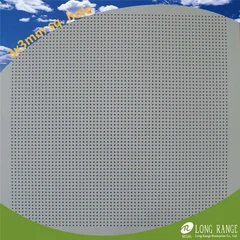
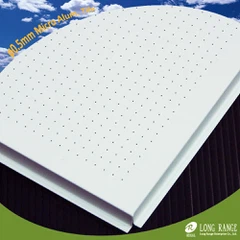
Before delving into the limitations, it is essential to recognize the numerous benefits that this type of gypsum board offers. Firstly, its perforated design provides excellent acoustic performance. The round holes act as sound absorbers, reducing echo and reverberation in large spaces such as auditoriums, conference rooms, and recording studios. This makes it an ideal choice for environments where noise control is a priority.
Secondly, the 13.5mm round hole gypsum board is highly customizable in terms of appearance. The size, spacing, and pattern of the round holes can be adjusted according to the specific design requirements of a project. This allows architects and designers to create unique and visually appealing interiors that are both functional and aesthetically pleasing.
In addition, gypsum boards are known for their fire - resistance properties. The 13.5mm round hole gypsum board is no exception. It can help to contain fires and prevent their spread, providing an extra layer of safety in buildings. Moreover, gypsum is a natural material, which makes it an environmentally friendly option compared to some synthetic building materials.
Limitations of 13.5mm Round Hole Gypsum Board
Structural Strength
One of the main limitations of the 13.5mm round hole gypsum board is its relatively lower structural strength compared to solid gypsum boards. The presence of round holes weakens the overall structure of the board, making it less suitable for applications where high load - bearing capacity is required. For example, in areas where the board may be subject to heavy impacts or pressure, such as in industrial facilities or high - traffic corridors, the 13.5mm round hole gypsum board may not be the best choice.
In such cases, additional support structures or reinforcement may be necessary to ensure the stability of the installation. This can increase the overall cost and complexity of the project. Moreover, the reduced structural strength also means that the board may be more prone to damage during handling and installation. Care must be taken to avoid dropping or bending the board, as this can cause cracks or breakage.


Moisture Resistance
Another significant limitation is its relatively poor moisture resistance. Gypsum is a porous material, and the presence of round holes further increases its susceptibility to moisture absorption. In humid environments or areas prone to water exposure, such as bathrooms, kitchens, and basements, the 13.5mm round hole gypsum board may not perform well.
When the board absorbs moisture, it can become soft and lose its structural integrity. This can lead to sagging, warping, and the growth of mold and mildew, which not only affects the appearance of the board but also poses a health risk to the occupants of the building. To use the 13.5mm round hole gypsum board in such environments, proper waterproofing measures must be taken, such as applying a waterproof coating or installing a vapor barrier behind the board. However, these additional steps can add to the cost and labor of the project.
Limited Design Flexibility in Some Cases
While the perforated design of the 13.5mm round hole gypsum board offers a certain degree of design flexibility, it also has its limitations. For some very specific or complex design concepts, the standard round hole pattern may not be sufficient. The round holes are typically arranged in a regular pattern, which may not be suitable for designs that require irregular or free - form perforations.
In addition, the size of the round holes is also somewhat limited. If a project requires extremely large or extremely small holes, it may be difficult to find a supplier that can produce the 13.5mm round hole gypsum board with the desired hole size. This can restrict the creative freedom of architects and designers, especially in projects where a high level of customization is required.
Maintenance Requirements
The 13.5mm round hole gypsum board requires more maintenance compared to solid gypsum boards. The round holes can accumulate dust and debris over time, which can affect the acoustic performance and appearance of the board. Regular cleaning is necessary to keep the board in good condition.
Cleaning the perforated board can be a challenging task, as special tools may be required to reach into the holes. Moreover, if the board is painted or coated, the holes can make it more difficult to achieve a smooth and uniform finish. Any damage to the paint or coating in the holes can also be more noticeable, which may require more frequent touch - ups.
Mitigating the Limitations
Despite these limitations, there are ways to mitigate their impact. For the issue of structural strength, engineers can design appropriate support systems based on the specific requirements of the project. For example, using metal studs or wooden frames to reinforce the board can significantly improve its load - bearing capacity.
To address the moisture resistance problem, as mentioned earlier, waterproofing treatments can be applied. Additionally, using moisture - resistant gypsum core materials can also enhance the board's ability to withstand humid conditions.
In terms of design flexibility, working closely with the supplier can sometimes lead to customized solutions. Some suppliers may be able to produce non - standard hole patterns or sizes through special manufacturing processes.
For maintenance, proper cleaning schedules and the use of appropriate cleaning tools can help to keep the board in good condition. It is also advisable to choose high - quality paints and coatings that are more durable and less likely to chip or peel.
Conclusion
The 13.5mm round hole gypsum board is a unique and useful building material with its own set of advantages and limitations. While it offers excellent acoustic performance, aesthetic appeal, and fire - resistance, its relatively low structural strength, poor moisture resistance, limited design flexibility in some cases, and higher maintenance requirements need to be carefully considered when selecting it for a project.
As a supplier of Gypsum Board 13.5mm Round Hole, I am committed to providing high - quality products and professional advice to our customers. If you are considering using the 13.5mm round hole gypsum board in your next project, I encourage you to contact us for a detailed discussion. We can help you assess whether this material is suitable for your specific needs and provide solutions to overcome any potential limitations.
References
- Smith, J. (2018). Building Materials: Properties and Applications. New York: McGraw - Hill.
- Johnson, R. (2020). Acoustic Design for Buildings. London: Routledge.
- Construction Industry Research and Information Association. (2019). Gypsum Board Installation Guide.
Send Inquiry