

Is a 24mm face grid resistant to electromagnetic interference?
Dec 17, 2025
Leave a message
Hey there! I'm a supplier of 24mm face grids, and today I want to dig into a pretty interesting question: Is a 24mm face grid resistant to electromagnetic interference?
First off, what's electromagnetic interference (EMI) anyway? EMI is basically the disruption that happens when an electromagnetic field messes with an electrical circuit. It can come from all sorts of sources, like power lines, electronic devices, and even natural phenomena. And it can cause all kinds of problems, from making your TV picture all fuzzy to screwing up the operation of sensitive medical equipment.
Now, let's talk about our 24mm face grids. These grids are used in a bunch of different applications, especially in suspended ceiling systems. They're known for their strength, durability, and aesthetic appeal. But when it comes to EMI resistance, it's a bit more complicated.
The material of the 24mm face grid plays a huge role. Most of our grids are made from high - quality metals like steel or aluminum. Metals are generally good conductors of electricity. On one hand, a conductive material can act as a shield against EMI. When an electromagnetic wave hits a metal surface, the electrons in the metal start to move in response to the wave. This movement creates an opposing electromagnetic field that can cancel out or reduce the strength of the incoming wave. So, in theory, our 24mm face grids made of metal have the potential to provide some level of EMI shielding.
However, it's not as simple as just having a metal grid. The effectiveness of the EMI shielding depends on several factors. One of the key factors is the thickness of the metal. A thicker metal grid will generally provide better shielding than a thinner one. Our 24mm face grids are designed to have an optimal thickness to balance strength, weight, and cost. But this thickness might not be enough to completely block out all types of EMI, especially high - frequency interference.
Another important factor is the continuity of the metal. If there are gaps, holes, or breaks in the grid, electromagnetic waves can easily penetrate through. That's why we take great care in the manufacturing process to ensure that our grids are as seamless as possible. But in a real - world installation, there might be some joints or connections between different grid sections. These areas need to be properly grounded and sealed to maintain the integrity of the EMI shield.
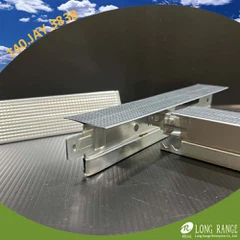
Let's take a look at some of our popular products. We have the Suspended Ceiling Grid T24 MT33h CT25h. This grid is made from a high - grade steel that offers decent conductivity. It's been tested in some basic EMI scenarios, and it shows a certain level of resistance to low - frequency interference. But for more complex and high - frequency EMI, additional measures might be needed.
Then there's the Suspended Ceiling Grid T24 MT38h CT38h Jay Ends. This one has a slightly different design and is made from a different alloy of aluminum. Aluminum is a lightweight metal, but it can also be an effective EMI shield. The Jay Ends design helps to reduce the number of gaps and joints, which in turn improves the overall EMI resistance.
And we also have the Suspended Ceiling Grid UT24 MT38h CT38h Jay Ends. This grid is similar to the previous one but has some unique features that make it suitable for specific applications. It's been engineered to provide a good balance between EMI shielding and cost - effectiveness.
In some cases, if you're in an environment with a high level of EMI, you might want to consider additional shielding measures. For example, you could use a conductive paint or coating on the grid to enhance its EMI resistance. Or you could install a secondary shielding layer behind the grid.
It's also important to note that the performance of the 24mm face grid in terms of EMI resistance can be affected by the surrounding environment. If there are other metal objects nearby, they can interact with the grid and either enhance or disrupt the EMI shielding. And if the grid is installed in a building with a lot of electrical equipment, the electromagnetic fields generated by these devices can be very complex and hard to predict.
So, to answer the question, a 24mm face grid can offer some level of resistance to electromagnetic interference, but it's not a one - size - fits - all solution. The actual EMI resistance depends on the material, thickness, design, and installation of the grid, as well as the characteristics of the electromagnetic environment.
If you're in the market for 24mm face grids and are concerned about EMI, we're here to help. Our team of experts can work with you to understand your specific requirements and recommend the best product for your needs. Whether you're building a commercial office, a hospital, or a data center, we have the right grid for you.
If you're interested in learning more about our 24mm face grids or want to start a procurement discussion, don't hesitate to reach out. We're always ready to talk about how our products can meet your demands and solve your problems.


References:
- "Electromagnetic Compatibility Engineering" by Henry W. Ott
- "Handbook of Electromagnetic Compatibility" edited by Clayton R. Paul
Send Inquiry