

What is the effect of drill bit geometry on a 6mm round hole?
Dec 16, 2025
Leave a message
When it comes to manufacturing 6mm round holes, the geometry of the drill bit plays a pivotal role in determining the quality, efficiency, and overall outcome of the drilling process. As a dedicated supplier of 6mm round holes, I've witnessed firsthand how different drill bit geometries can significantly impact the final product. In this blog post, I'll delve into the various aspects of drill bit geometry and explore their effects on creating precise and high - quality 6mm round holes.
1. Basics of Drill Bit Geometry
Drill bit geometry encompasses several key elements, including the point angle, helix angle, flute design, and chisel edge. Each of these features has a unique influence on the drilling process.
The point angle is the angle formed at the tip of the drill bit. Common point angles range from 118° to 135°. A smaller point angle, such as 118°, is well - suited for softer materials like wood and plastics. It allows the drill bit to penetrate the material more easily, reducing the force required for initial entry. On the other hand, a larger point angle, around 135°, is better for harder materials like metals. It provides a more stable cutting edge and helps prevent the drill bit from wandering when starting the hole.
The helix angle refers to the angle of the flutes on the drill bit. Flutes are the spiral grooves that run along the length of the drill bit. A high helix angle (e.g., 30° - 45°) is beneficial for materials that produce long chips, such as aluminum. The high helix helps in quickly evacuating the chips from the hole, preventing chip clogging and reducing the risk of overheating. In contrast, a low helix angle (e.g., 10° - 20°) is more suitable for brittle materials like cast iron, as it provides better control and reduces the likelihood of the material cracking.
The flute design also affects the drilling process. Straight flutes are simple and easy to manufacture. They are often used for drilling in softer materials where chip evacuation is not a major concern. Spiral flutes, as mentioned earlier, are more effective for chip removal and are commonly used in a wide range of materials.
The chisel edge is the short, straight edge at the center of the drill bit tip. A well - designed chisel edge can improve the drill bit's centering ability and reduce the thrust force required for drilling. However, if the chisel edge is too long or poorly ground, it can cause the drill bit to wander and increase the risk of hole deviation.
2. Impact on Hole Quality
The geometry of the drill bit has a direct impact on the quality of the 6mm round hole. One of the most important aspects of hole quality is its diameter accuracy. A drill bit with a proper point angle and well - ground cutting edges will be more likely to produce a hole with the correct diameter. For example, if the point angle is too large or the cutting edges are worn, the hole may end up being larger than the desired 6mm.
Roundness is another crucial factor. A drill bit with a stable cutting edge and good centering ability will create a more perfectly round hole. The helix angle and flute design also play a role here. If the chips are not properly evacuated, they can cause uneven cutting forces, leading to a non - round hole.
Surface finish is also affected by drill bit geometry. A drill bit with sharp cutting edges and a suitable helix angle for chip evacuation will leave a smoother surface inside the hole. In contrast, a dull drill bit or one that struggles with chip removal can result in a rough surface finish, which may not be acceptable for applications where a smooth surface is required.
3. Drilling Efficiency
Drill bit geometry also has a significant impact on drilling efficiency. As a 6mm round hole supplier, efficiency is crucial for meeting production deadlines and reducing costs.
A drill bit with the right point angle can reduce the time and force required to start the hole. For instance, when drilling through a thick metal plate, a 135° point angle drill bit will penetrate the surface more quickly and with less effort compared to a 118° point angle bit.


The helix angle and flute design are key factors in chip evacuation. Efficient chip evacuation means that the drill bit can continue to cut without interruption, reducing the need for frequent stops to clear the chips. This not only speeds up the drilling process but also extends the life of the drill bit by preventing overheating and excessive wear.
Moreover, a well - designed chisel edge can improve the drill bit's self - centering ability. This reduces the time spent on aligning the drill bit accurately, further enhancing the overall drilling efficiency.
4. Material Compatibility
Different materials require different drill bit geometries. As a 6mm round hole supplier, we deal with a wide range of materials, including metals, plastics, and gypsum.
For metals, such as steel and aluminum, a drill bit with a high - speed steel (HSS) or carbide tip is often used. A 135° point angle and a high helix angle are suitable for most metal drilling applications. The high helix angle helps in evacuating the long chips produced by metals, while the 135° point angle provides stability and reduces the risk of the drill bit wandering.
Plastics are generally softer materials. A drill bit with a 118° point angle and a relatively low helix angle can be used. The low helix angle provides better control and reduces the risk of the plastic melting due to excessive heat generated during drilling.
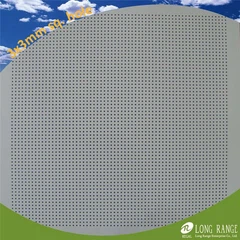
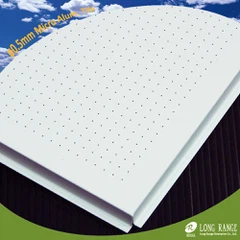
When it comes to Gypsum Board 6mm Round Hole, a special drill bit geometry is required. Gypsum is a brittle material, so a drill bit with a sharp point and a low helix angle is ideal. The sharp point can penetrate the gypsum easily, and the low helix angle helps in preventing the gypsum from cracking.
5. Cost Considerations
The choice of drill bit geometry also has cost implications. High - performance drill bits with advanced geometries, such as carbide - tipped bits, are generally more expensive than standard high - speed steel bits. However, they often offer longer tool life and better performance, which can result in cost savings in the long run.
For example, a carbide - tipped drill bit may have a higher upfront cost, but it can drill more holes before needing to be replaced compared to an HSS bit. This reduces the frequency of tool replacement and the associated downtime, ultimately leading to lower overall production costs.
On the other hand, for low - volume production or less demanding applications, a standard HSS drill bit with a basic geometry may be sufficient. This can help in keeping the initial investment low.
6. Conclusion and Call to Action
In conclusion, the geometry of the drill bit has a profound effect on the quality, efficiency, and cost of creating 6mm round holes. As a 6mm round hole supplier, we understand the importance of choosing the right drill bit geometry for different materials and applications. Whether you are working with metals, plastics, or gypsum, the right drill bit can make all the difference in achieving the desired results.
If you are in need of high - quality 6mm round holes for your projects, we are here to help. We have extensive experience in providing precision - drilled holes and can assist you in selecting the most suitable drill bit geometry for your specific requirements. Contact us today to start a discussion about your procurement needs and let's work together to achieve the best outcomes for your projects.
References
- Black, J. T., & Decker, R. A. (2008). The Elements of Manufacturing Processes. Wiley.
- Kalpakjian, S., & Schmid, S. R. (2014). Manufacturing Engineering and Technology. Pearson.
- Trent, E. M., & Wright, P. K. (2000). Metal Cutting. Butterworth - Heinemann.
Send Inquiry