

What is the acoustic performance of micro perforated aluminium ceiling tiles?
Oct 23, 2025
Leave a message
Hey there! As a supplier of Micro Perforated Aluminium Ceiling Tiles, I'm super stoked to chat with you about their acoustic performance. You might be wondering, "What's the big deal about these little perforated tiles?" Well, let me tell you, they're a game-changer when it comes to sound management in various spaces.
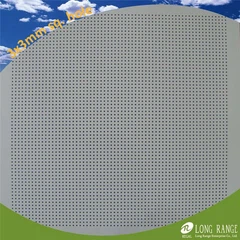
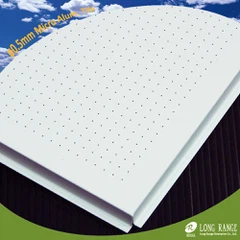
First off, let's understand the basics. Micro Perforated Aluminium Ceiling Tiles are made from high - quality aluminium sheets that have tiny holes punched through them. These holes, or perforations, are what give the tiles their unique acoustic properties. The size, spacing, and pattern of the perforations can be customized to achieve different acoustic effects.
One of the key factors in acoustic performance is sound absorption. When sound waves hit a surface, they can either be reflected, absorbed, or transmitted. In a room with hard, non - porous surfaces like concrete or glass, sound waves tend to bounce around, creating echoes and reverberation. This can make it difficult to have clear conversations or enjoy music without a lot of background noise.
Micro Perforated Aluminium Ceiling Tiles work by absorbing sound waves. When a sound wave hits the perforated surface, it enters the holes and gets trapped inside the tile. The energy of the sound wave is then converted into heat through friction with the inner walls of the perforations. This process significantly reduces the amount of sound that is reflected back into the room, thus improving the overall acoustic quality.
The absorption coefficient is a measure of how well a material absorbs sound. It ranges from 0 to 1, where 0 means no absorption (all sound is reflected) and 1 means complete absorption. Micro Perforated Aluminium Ceiling Tiles can achieve absorption coefficients of up to 0.9 or even higher, depending on the design of the perforations and the backing material used.
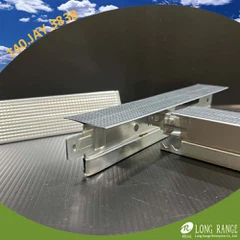
The backing material plays a crucial role in enhancing the acoustic performance of the tiles. A common backing material is a non - woven fabric or a fiberglass mat. These materials help to further trap the sound waves inside the tile and increase the absorption efficiency. The combination of the perforated aluminium surface and the backing material creates a multi - layer system that is highly effective at reducing sound reflections.
Another important aspect of acoustic performance is the frequency range over which the tiles are effective. Different spaces have different acoustic requirements, and the frequency range of the sound that needs to be controlled can vary widely. For example, in a concert hall, you might want to focus on absorbing mid - to high - frequency sounds to enhance the clarity of the music. In an office environment, on the other hand, you may need to reduce low - frequency noise from machinery or traffic.
Micro Perforated Aluminium Ceiling Tiles can be designed to target specific frequency ranges. By adjusting the size and spacing of the perforations, as well as the thickness of the tile and the backing material, we can fine - tune the acoustic response of the tiles. This means that we can create tiles that are optimized for different applications, whether it's a recording studio, a restaurant, or a classroom.
In addition to sound absorption, Micro Perforated Aluminium Ceiling Tiles also offer some other benefits that contribute to a better acoustic environment. For instance, they can help to reduce flutter echoes. Flutter echoes occur when sound waves bounce back and forth between two parallel surfaces, creating a rapid, repetitive sound. The perforated surface of the tiles breaks up these sound waves and prevents the formation of flutter echoes.
Moreover, these tiles can add a touch of aesthetic appeal to a space. They come in a variety of colors, finishes, and patterns, allowing you to create a ceiling that not only sounds great but also looks great. You can choose from smooth finishes for a modern, minimalist look or textured finishes for a more rustic or industrial feel.


Now, let's talk about some real - world applications. In commercial buildings, such as offices and shopping malls, Micro Perforated Aluminium Ceiling Tiles can significantly improve the acoustic comfort for employees and customers. By reducing noise levels and echoes, they create a more pleasant and productive environment. In educational institutions, like schools and universities, these tiles can enhance the learning experience by improving speech intelligibility in classrooms and lecture halls.
In the hospitality industry, restaurants and hotels can benefit from the use of these tiles. They can create a more intimate and relaxing atmosphere by reducing background noise and making it easier for guests to have conversations. In entertainment venues, such as theaters and concert halls, Micro Perforated Aluminium Ceiling Tiles can be used to fine - tune the acoustics and ensure a high - quality audio experience for the audience.
If you're in the market for Micro Perforated Aluminium Ceiling Tiles, you can check out our product page Micro Perforated Aluminium Ceiling Tile. We offer a wide range of options to meet your specific acoustic and aesthetic needs. Whether you're a contractor, an architect, or a building owner, we're here to help you find the perfect solution for your project.
If you have any questions or want to discuss your requirements in more detail, don't hesitate to reach out. We're always happy to have a chat and help you make the best decision for your space. Our team of experts can provide you with technical advice, samples, and quotes to ensure that you get the most out of your investment in Micro Perforated Aluminium Ceiling Tiles.
So, if you're looking to improve the acoustic performance of your space while adding a touch of style, give us a shout. Let's work together to create a space that sounds as good as it looks!
References:
- Acoustics Handbook, CRC Press
- Sound and Vibration Control Engineering: Principles and Applications, Wiley
Send Inquiry