

What is the weight of Suspended Ceiling Grid T24 MT33h CT25h?
Oct 16, 2025
Leave a message
As a seasoned supplier of Suspended Ceiling Grid T24 MT33h CT25h, I often encounter inquiries about the weight of these essential ceiling components. Understanding the weight of suspended ceiling grids is crucial for various reasons, including installation planning, structural considerations, and transportation logistics. In this blog post, I will delve into the factors that influence the weight of Suspended Ceiling Grid T24 MT33h CT25h and provide insights to help you make informed decisions.
Understanding Suspended Ceiling Grid T24 MT33h CT25h
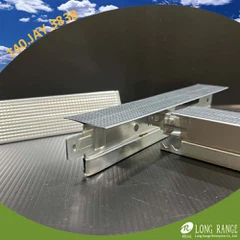
Before discussing the weight, let's briefly understand what Suspended Ceiling Grid T24 MT33h CT25h is. These ceiling grids are part of a modular system used to create suspended ceilings, which are commonly installed in commercial and residential buildings. The "T24" refers to the width of the main runner, which is 24mm. The "MT33h" and "CT25h" denote the main tee and cross tee profiles, respectively, with specific height dimensions.
These grids are typically made of materials such as galvanized steel or aluminum, which offer durability, strength, and corrosion resistance. The choice of material can significantly affect the weight of the ceiling grid.
Factors Affecting the Weight of Suspended Ceiling Grid T24 MT33h CT25h
Material
As mentioned earlier, the material used in the construction of the ceiling grid plays a crucial role in determining its weight. Galvanized steel is a popular choice due to its strength and cost - effectiveness. However, it is relatively heavier compared to aluminum. Aluminum ceiling grids are lighter, which can be an advantage in applications where weight is a concern, such as in older buildings with limited structural capacity.
Dimensions
The dimensions of the ceiling grid, including the length, width, and height of the main runner, main tee, and cross tee, also impact the weight. Longer and thicker profiles will generally weigh more than shorter and thinner ones. For example, a longer main runner will require more material, thus increasing the overall weight.
Thickness of the Material
The thickness of the steel or aluminum sheet used in manufacturing the ceiling grid is another important factor. Thicker sheets will result in a heavier grid. Manufacturers often offer different thickness options to meet various strength and durability requirements. A thicker grid may be necessary in areas with high traffic or where additional support is needed.
Calculating the Weight of Suspended Ceiling Grid T24 MT33h CT25h
To calculate the weight of Suspended Ceiling Grid T24 MT33h CT25h, we need to consider the material density, dimensions, and quantity of each component.
Let's assume we are using galvanized steel with a density of approximately 7850 kg/m³. First, we need to determine the volume of each component. For example, if the main runner has a cross - sectional area (A) (which can be calculated based on its width and height) and a length (L), the volume (V = A\times L).
Once we have the volume of each component, we can calculate the weight using the formula (W=\rho\times V), where (\rho) is the density of the material.
For a more accurate calculation, we need to consider all the main runners, main tees, and cross tees in the ceiling grid system. This calculation can be complex, especially for large - scale projects.
Importance of Knowing the Weight
Installation Planning
Knowing the weight of the ceiling grid is essential for installation planning. Installers need to ensure that the building's structure can support the weight of the suspended ceiling. If the weight exceeds the structural capacity, additional support may be required, which can add to the cost and complexity of the installation.


Transportation Logistics
The weight of the ceiling grid also affects transportation logistics. Heavier grids may require larger vehicles and more fuel for transportation. This can increase the overall cost of the project. Additionally, weight restrictions on roads and bridges need to be considered to ensure compliance with regulations.
Comparison with Other Ceiling Grid Products
It's also useful to compare the weight of Suspended Ceiling Grid T24 MT33h CT25h with other similar products. For instance, you can check out Suspended Ceiling Grid T24 MT48h CT38h Jay Ends, Suspended Ceiling Grid T24 MT38h CT38h Jay Ends, and Suspended Ceiling Grid T24 MT38h CT28h Jay Ends. These products may have different weight characteristics due to variations in their dimensions and materials.
Conclusion
In conclusion, the weight of Suspended Ceiling Grid T24 MT33h CT25h is influenced by factors such as material, dimensions, and material thickness. Understanding the weight is crucial for installation planning, transportation logistics, and ensuring the structural integrity of the building.
If you are in the market for Suspended Ceiling Grid T24 MT33h CT25h or have any questions regarding its weight, dimensions, or other specifications, I encourage you to reach out to me. I am committed to providing high - quality products and expert advice to meet your ceiling grid needs. Whether you are a contractor, architect, or building owner, I am here to assist you in your project. Let's start a conversation about your requirements and explore how our ceiling grid solutions can add value to your space.
References
- Building Construction Handbook, McGraw - Hill
- Steel Construction Manual, American Institute of Steel Construction
- Aluminum Association Technical Publications
Send Inquiry