

Is Gypsum Board 5x5mm Square Hole suitable for curved surfaces?
Nov 10, 2025
Leave a message
Hey there! As a supplier of Gypsum Board 5x5mm Square Hole, I often get asked if this type of gypsum board is suitable for curved surfaces. Well, let's dive right into it and explore this question in detail.
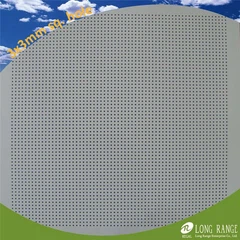
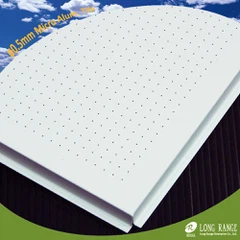
First off, let's talk a bit about what gypsum board with a 5x5mm square hole is. This kind of gypsum board is a perforated one. The 5x5mm square holes serve multiple purposes. They can enhance the acoustic performance of the board, allowing sound waves to pass through and get absorbed, which is great for places like recording studios, theaters, or large meeting rooms. Also, these holes can add a unique aesthetic touch to the interior design, giving a modern and industrial look.
Now, when it comes to using it on curved surfaces, there are a few factors we need to consider.
Flexibility and Bendability
Gypsum board, in general, is a relatively rigid material. However, the 5x5mm square holes can actually help a bit with its flexibility. The holes create weak points in the board, which means it can be bent to a certain degree more easily than a solid gypsum board. But we're not talking about extreme curves here. For gentle curves, say with a large radius like a curved hallway or a rounded partition in an open - plan office, it might just work.


The key here is to test a small piece first. Cut out a small section of the gypsum board and try to bend it to the desired curve. If it starts to crack or break, then you might need to adjust your plan. You could also try scoring the back of the board (on the non - decorative side) at regular intervals. This can further increase its bendability. But be careful not to score it too deeply, or the board will fall apart.
Installation Challenges
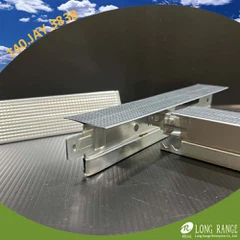
Installing gypsum board on a curved surface is trickier than on a flat one, no matter what type of board you're using. With the 5x5mm square hole gypsum board, the holes can make it a bit more challenging to attach it to the framework. When you're using nails or screws, you need to be extra careful not to split the board around the holes.
One option is to use adhesives in addition to mechanical fasteners. Adhesives can help hold the board in place while you're securing it with nails or screws. Make sure to choose an adhesive that is suitable for gypsum board and can withstand the stress of the curved installation.
Another challenge is getting a seamless finish. On a curved surface, it's more difficult to align the edges of the gypsum boards perfectly. This is especially important when you're using the board for aesthetic purposes. You might need to do some extra sanding and finishing work to make the joints less noticeable.
Structural Integrity
The structural integrity of the gypsum board on a curved surface is a crucial concern. The 5x5mm square holes can weaken the board to some extent, and when it's bent, the stress is distributed differently compared to a flat installation.
For small - scale projects or non - load - bearing applications, the gypsum board should be able to handle the curvature without major issues. But for larger curved structures or those that might be subject to more stress, like in a high - traffic area, you might need to reinforce the board. This could involve adding a backing material or using a stronger framework.
Aesthetic Considerations
The 5x5mm square holes give the gypsum board a distinct look. On a curved surface, this look can be even more interesting. The holes can create a play of light and shadow as you move around the curve, adding depth and visual appeal.
However, the curvature can also distort the pattern of the holes. If you're going for a very precise and uniform look, this might be a problem. You'll need to carefully plan the installation to make sure the pattern looks as good as possible on the curve.
Cost - effectiveness
Using gypsum board on a curved surface can be more expensive than on a flat one. There's more waste involved, as you might need to cut the board to fit the curve. And the extra installation time and materials, like adhesives and additional finishing products, also add to the cost.
But if you're looking for a unique and cost - effective alternative to other curved wall materials, the 5x5mm square hole gypsum board can still be a good option. It's generally more affordable than some custom - made curved panels or high - end materials.
In conclusion, the Gypsum Board 5x5mm Square Hole can be suitable for curved surfaces, but it comes with its own set of challenges. It's best for gentle curves in non - load - bearing applications where you're looking for an acoustic and aesthetic solution.
If you're considering using our gypsum board for a curved surface project, I'd be more than happy to help. We can provide you with samples so you can test the bendability and see how it looks. And our team of experts can offer advice on installation and finishing. Just reach out to us to start the conversation and discuss your specific needs. We're here to make your project a success!
References
- Building Construction Handbook, various editions
- Gypsum Association Technical Documents
- Acoustic Materials and Their Applications research papers
Send Inquiry